Uranus at opposition 2026: how to find the green-blue planet
Uranus reaches opposition on November 25, 2026, at about 22:40 UTC. At opposition, Earth is between Uranus and the Sun. So Uranus is up all night, and it is at its brightest of the year.
Brightest is not very bright. Uranus is at magnitude 5.6. Under a very dark sky, a person with good eyes can just see it without help. With binoculars, it is easy to see, if you know where to look.
When to look
On the night of opposition, the full Moon is near Uranus in the sky. Its light hides faint things. So do not look that week.
Wait for the Moon to leave the evening sky. The best nights are from about December 2 to December 14. Uranus is almost as bright then as at opposition.
Uranus is highest near midnight. It gets high from the north: about 60 degrees in London and 70 degrees in New York. From Sydney, it gets about 35 degrees high, in the north.
Where to look
Uranus is in Taurus, about 5 degrees from the Pleiades, a small cluster of stars that looks like a tiny dipper.
- Find the Pleiades. They rise in the east in the evening.
- Point your binoculars a little south-east of the Pleiades.
- Look for a “star” with a faint green-blue color. That is Uranus.
The live sky map draws Uranus only under a very dark sky setting, because it is so faint. Read more on the Uranus opposition page.
Where to go
Uranus is faint, so a dark sky helps a lot. Find a park or a reserve in our list of stargazing places.
How far away it is
On November 25, Uranus is at its closest to Earth this year, about 2,760 million km away. Its light takes about 2 and a half hours to reach you.
Uranus was the first planet found with a telescope. William Herschel saw it in 1781. Before that, people knew only the planets they could see with their eyes.
More sky guides
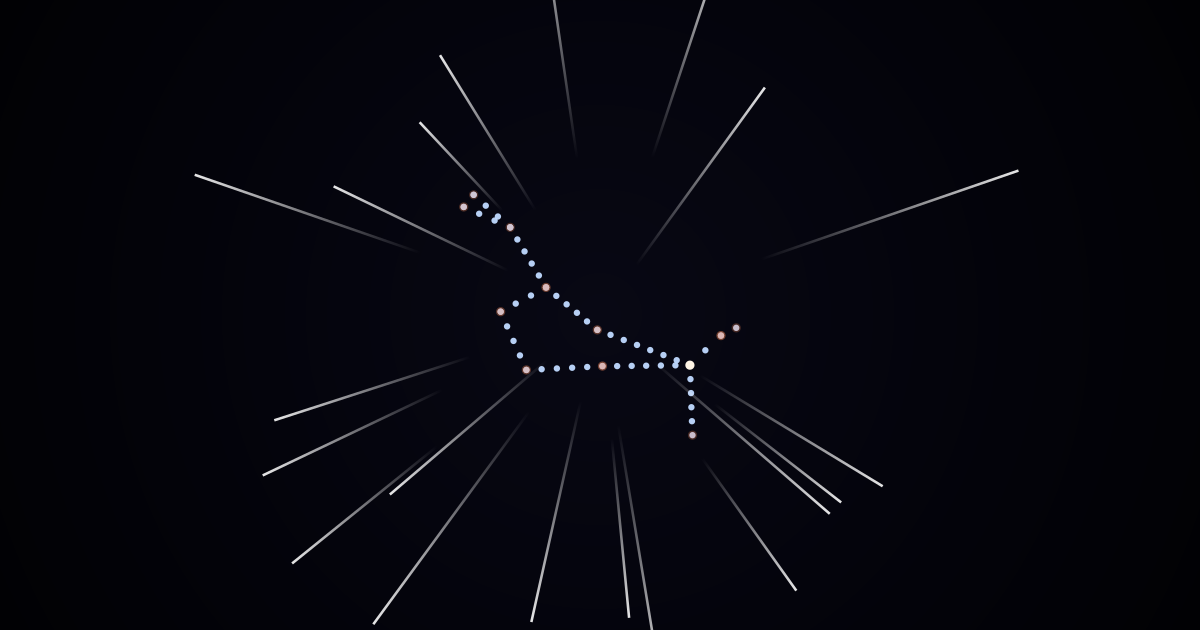
Quadrantids 2027: the short, strong meteor shower of January
The Quadrantids peak on January 4, 2027, at about 03:20 UTC. The peak is short, and the Moon is a thin crescent. Who gets the best view, and when to look.
The Christmas Eve full Moon 2026, the closest of the year
The full Moon of December 24, 2026 is the closest of the year, 356,738 km away. It looks a little bigger and brighter than usual. When to see it rise.
The best dark-sky places in the United States
9 certified dark-sky places in the United States to see the Milky Way, from the deserts of the Southwest to the forests of Pennsylvania.