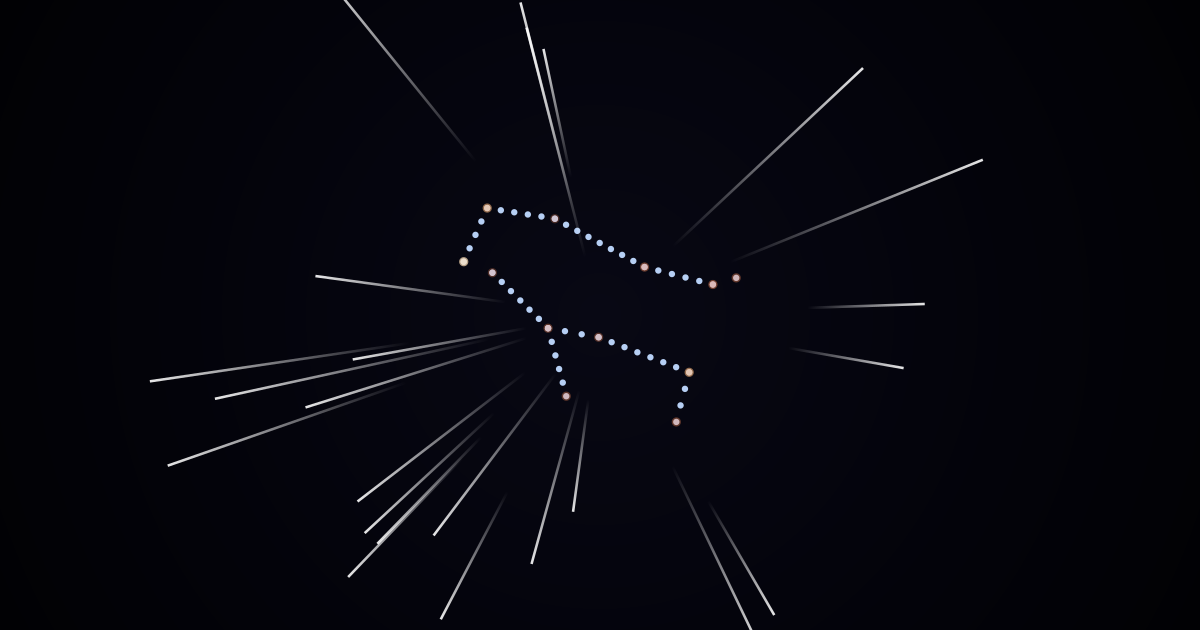
Geminids 2026: when to see the year's strongest shower
The Geminids are usually the strongest meteor shower of the year. In 2026 the peak is on December 14, at about 14:00 UTC. The peak is broad, so the nights next to it are good too.
The rate at the peak is about 150 meteors an hour. That number is for a perfect sky, with Gemini overhead. From a dark place you see fewer, but still many.
This year the Moon helps. It is a thin crescent, about 20 to 30% lit, and it sets in the evening. After it sets, there is no moonlight until dawn.
When to look
- Europe and Africa: the night of December 13 to 14, or December 14 to 15. The peak falls in your daytime, between the 2 nights.
- The Americas: the night of December 13 to 14 is closest to the peak. The next night is a good second choice.
- East Asia and Australia: the night of December 14 to 15. The peak is in your evening or near midnight.
The Geminids are best from the northern half of the world. From the south, Gemini stays low, so you see fewer meteors.
The Moon sets in the evening, but the time depends on where you are. In London it sets at about 8 pm on December 13 and 9 pm on December 14. In Madrid it sets almost 2 hours later, and in Sydney near midnight. Look up your local moonset, and start after it. The best hours are after midnight: Gemini is highest at about 2 am.
Where to look
The meteors seem to come from a point near the bright star Castor, in Gemini. But they cross the whole sky. Do not stare at Gemini. Look at a wide part of the sky, about halfway up.
See the Geminids on the live sky map, from your place, at the best time to look. Gemini rises in the evening, next to Orion.
Where to go
A dark sky shows many more meteors than a town sky. Most Geminids are faint. Find a park or a reserve in our list of stargazing places, or see the dark places for the Geminids in your country.
How to watch
- Dress for the night. You will sit still for a long time, and in the north December nights are cold.
- Lie back on a chair or a mat. Your neck will thank you.
- Put your phone away. Your eyes need 20 to 30 minutes in the dark to see faint meteors. A bright screen undoes much of that.
- Be patient. Some minutes bring several meteors, and some bring none.
Why the Geminids are different
Most showers come from comets. The Geminids come from an asteroid, 3200 Phaethon. They hit the air at about 35 km a second. That is slow for a meteor, so they are easy to follow with your eye. Many of them are bright.
More sky guides
Quadrantids 2027: the short, strong meteor shower of January
The Quadrantids peak on January 4, 2027, at about 03:20 UTC. The peak is short, and the Moon is a thin crescent. Who gets the best view, and when to look.
The Christmas Eve full Moon 2026, the closest of the year
The full Moon of December 24, 2026 is the closest of the year, 356,738 km away. It looks a little bigger and brighter than usual. When to see it rise.
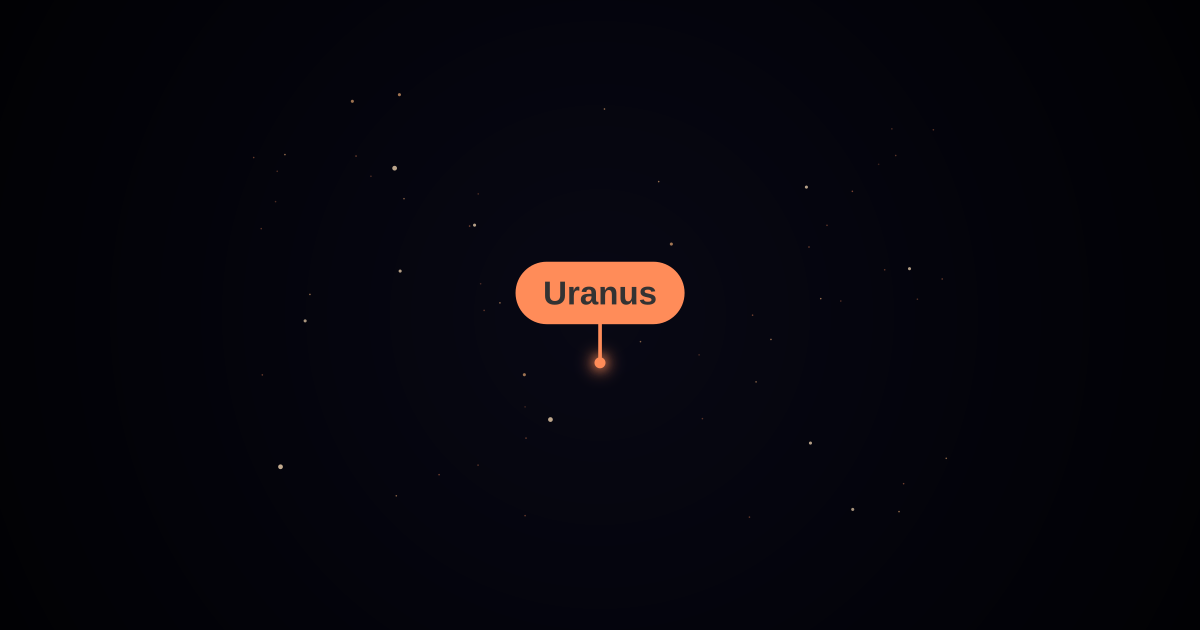
Uranus at opposition 2026: how to find the green-blue planet
Uranus reaches opposition on November 25, 2026, near the Pleiades. A full Moon is close that week, so early December is best. How to find it in binoculars.